To mark World Malaria Day, our CEO Justin McBeath reflects on 25 years of progress in vector control, and why sustained investment and innovation are critical to protect these gains.
This World Malaria Day, I’ve been reflecting on what the last 25 years (2000–2025) of investment in the field of vector control tells us
The research we recently commissioned with the Malaria Atlas Project shows how mosquito control innovations have reshaped the fight against malaria in Africa. Tools like insecticide-treated nets (ITNs) and new insecticides used in indoor residual spraying (IRS) have, collectively, been the most significant drivers of progress.
Over the past 25 years, vector control has been central to malaria prevention – this reflects the approximate time-period since the introduction of the first factory-treated ITNs. Indeed, scaling up ITN coverage has been particularly impactful, preventing an estimated 1.13 billion cases since 2000, while IRS has resulted in a further 85 million cases averted. Together, these interventions account for more than three-quarters of all malaria cases prevented during this period.
It is well recognised that progress can be fragile. Resistance to pyrethroids, which have been the main insecticide class used in ITNs since their introduction, was recognised as a threat within a few years after their introduction. It took another 15 years or so before the first non-pyrethroid insecticide (chlorfenapyr) was then introduced on ITNs — in Interceptor® G2.
Over the past 10 years or more, there has also been increasing recognition of the importance of outdoor malaria transmission. Despite best efforts with certain innovations, we are not really any closer to finding a viable solution to that problem.
That’s why the continued work of IVCC alongside our industry partners remains crucial to stay ahead of insecticide resistance and to find innovative solutions to address malaria transmission in different settings.
Bringing tools to market
It’s also critically important that any innovation translates to impact. Over the past 20 years, we’ve helped move promising research from the lab to the field. That means providing support in the development phase of potential new tools, helping to accelerate their successful introduction into the market and supporting the evidence generation, where it has been necessary, to affect the policy change which supports large scale procurement and deployment.
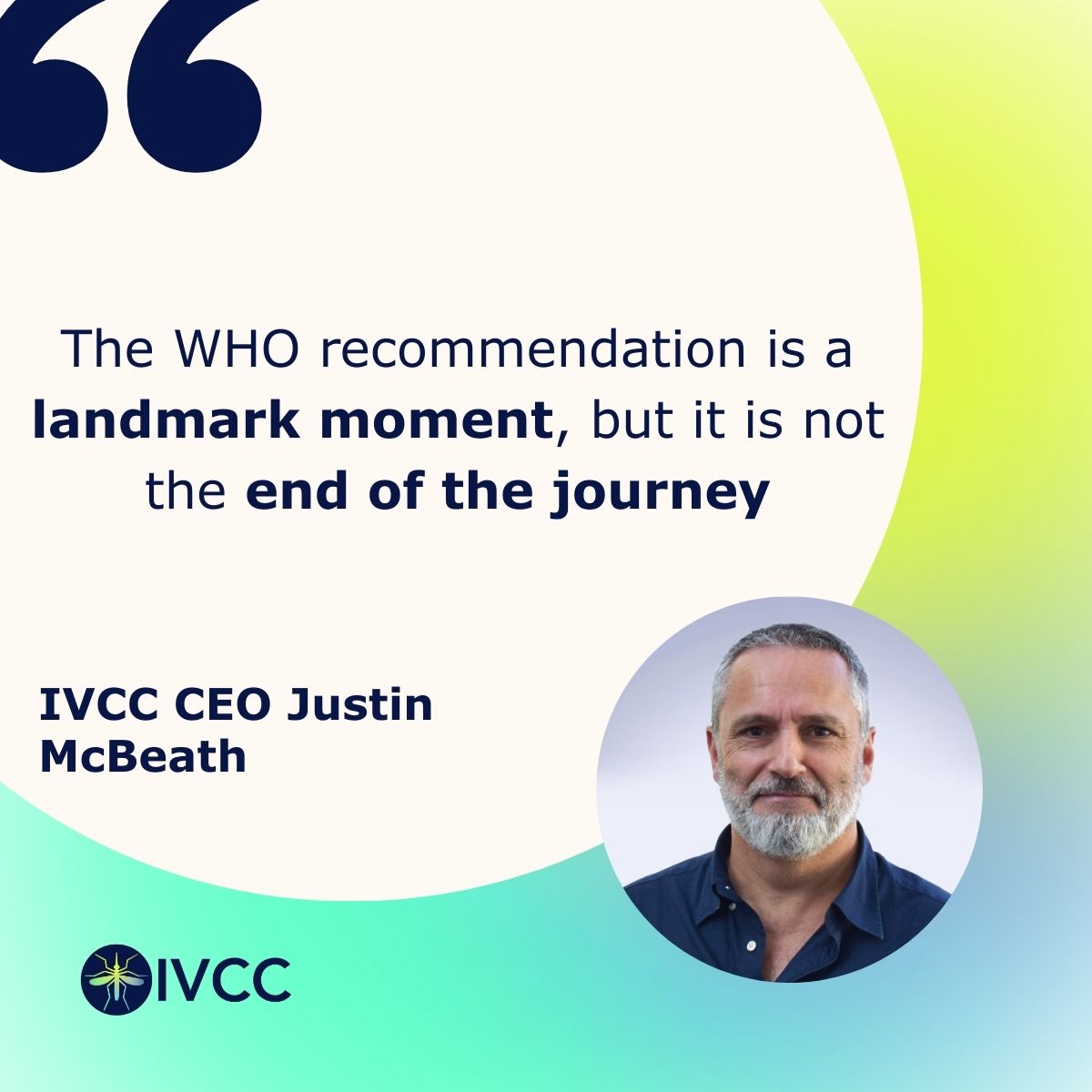
Next-generation dual-active ingredient nets like Interceptor G2 are a good example of this. Designed to maintain or improve effectiveness in the face of resistance to pyrethroid insecticides, they now represent the largest proportion of ITNs which are distributed, preventing millions of additional cases each year. The importance of policy change cannot be underestimated; a WHO Pre-Qualification for Interceptor G2 was achieved some 5 years before there was enough evidence to then support a change in WHO GMP Policy recommendation. In the absence of the policy recommendation, there was no mechanism to recognise the added public health value of these new ITNs and thus little to no market uptake. As we prepare for the introduction of further innovations which should improve our ability to beat malaria, these are important learnings to reflect on.
Progress, fragility, and urgency
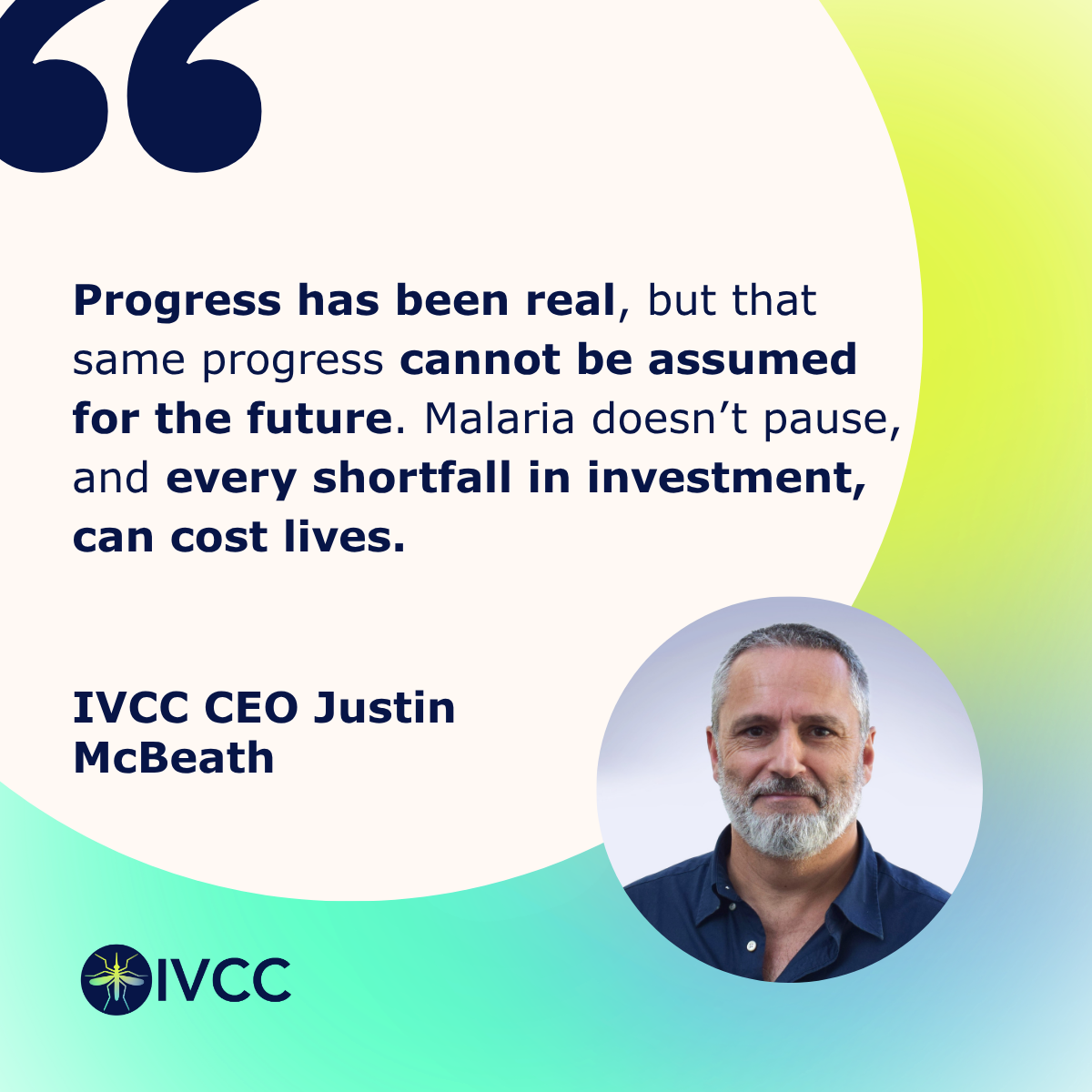
Progress has been real, but that same progress cannot be assumed for the future. Resistance remains an enduring threat (and the massive uptake of chlorfenapyr-based new ITNs brings its own resistance risk), funding pressures threaten delivery and our ability to advance innovation, and operational challenges can disrupt progress in vulnerable areas. Malaria doesn’t pause, and every shortfall in investment, can cost lives.
That’s why the theme of World Malaria Day 2026 resonates so strongly: Driven to End Malaria: Now We Can. Now We Must. We’ve got tools which, for now, work well, and we have the know-how to develop the right new tools to address future challenges.
World Malaria Day is more than just a date on the calendar. It’s a reminder of what’s possible when the global malaria community comes together. This year’s theme highlights both the progress made and the work that remains, calling on researchers, programme leaders, policymakers, funders, and the entire community to unite with a single purpose: ending malaria.
Looking forward
As we mark World Malaria Day, it’s worth reflecting on what the past 25 years informs us about the future. Innovation, collaboration, and determination have brought great strides in advancing progress against malaria. But the work isn’t over. Sustained investment, strong partnerships, and country-led decision-making remain essential.
At IVCC, we’ll keep working with our partners to develop new tools that address emerging challenges, anticipate continued resistance development, and protect the most vulnerable communities. And we will continue to advocate for the urgency and scale of action needed to sustain and accelerate progress.
Ending malaria is achievable — but only if we act together. Now We Can. Now We Must.