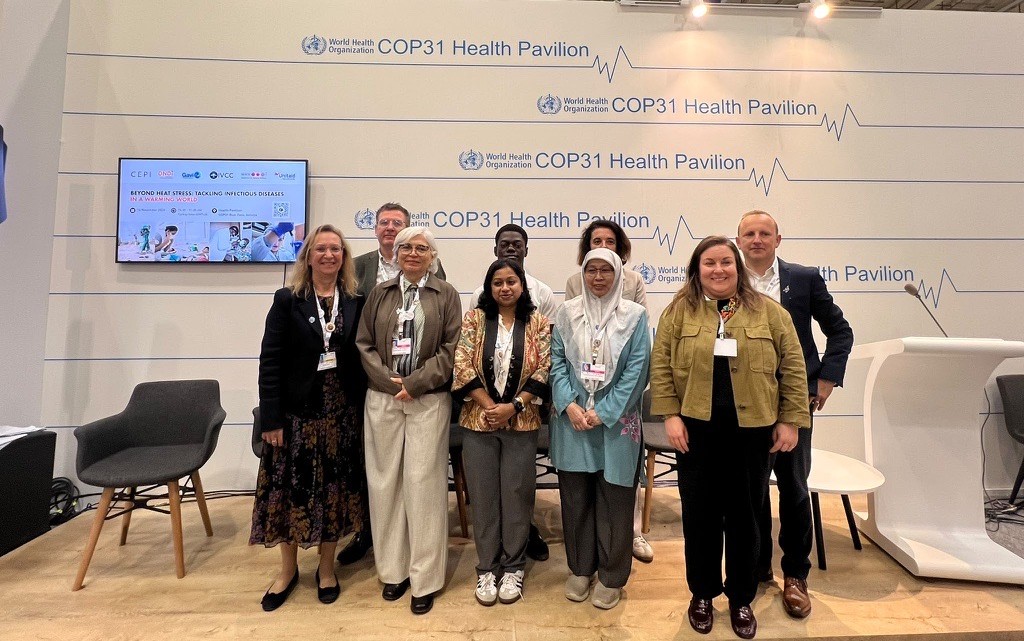
At COP31, IVCC joined global health partners to make the case for climate-sensitive infectious diseases as an adaptation priority.
Climate change-driven changes in temperature and rainfall can affect disease transmission, while extreme weather, population displacement and humanitarian emergencies can increase vulnerability and make some communities harder to reach.
For vector control, this raises an important question: how do we ensure the tools used to prevent disease remain effective and practical as the environments in which they are needed change?
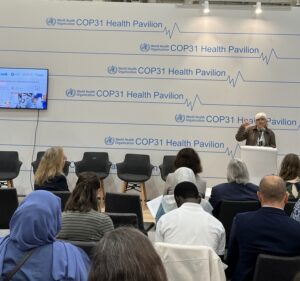
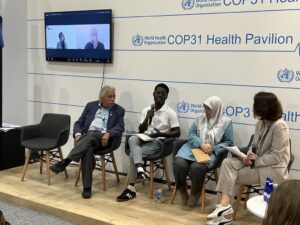
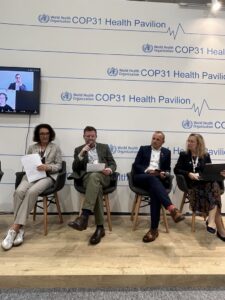
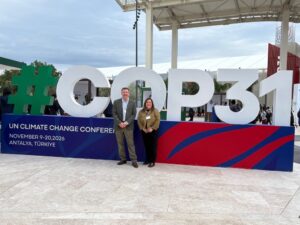
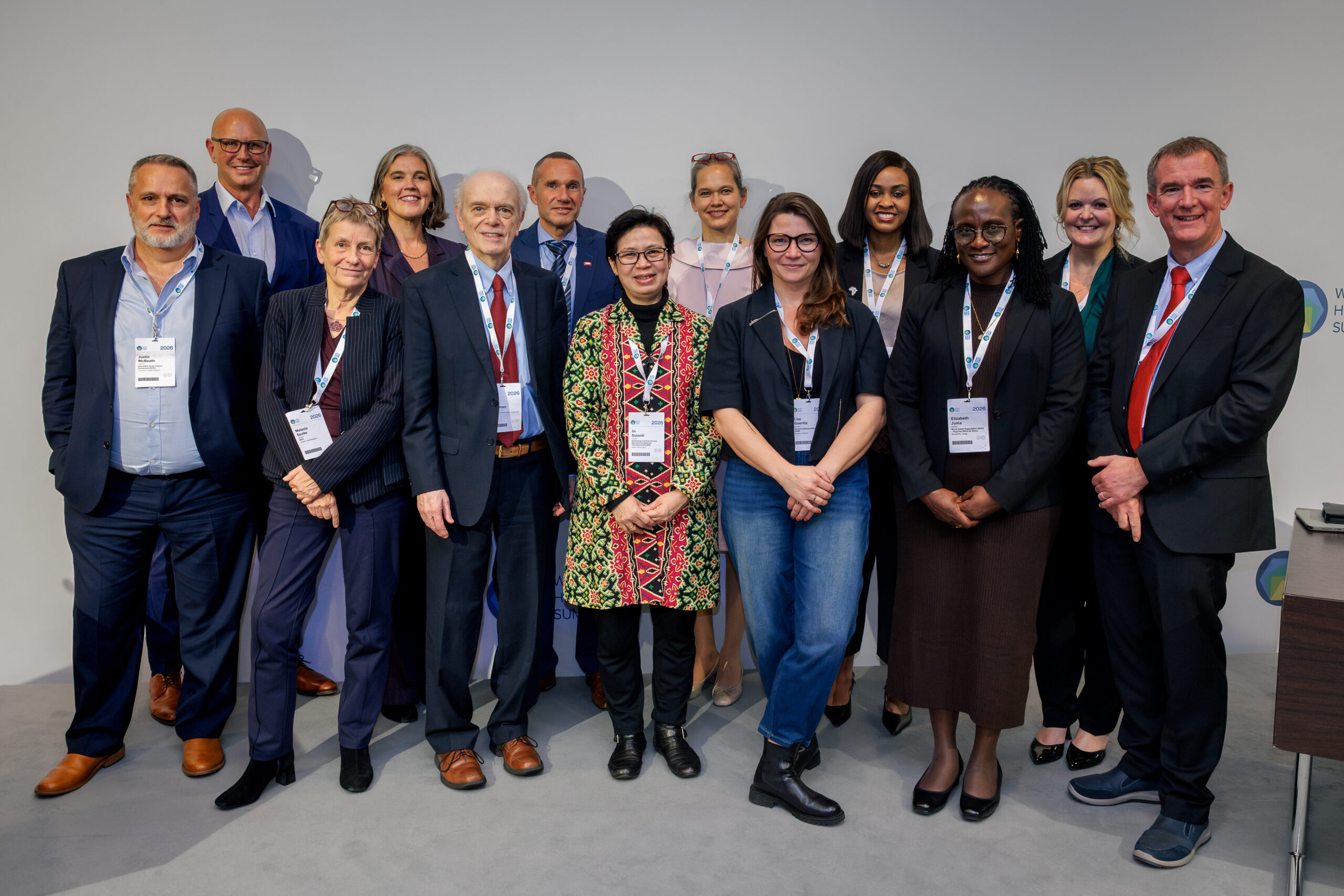
This was a central theme for IVCC at COP31 in Antalya, Türkiye. At the COP31 Health Pavilion, IVCC joined CEPI, DNDi, Gavi, Medicines for Malaria Venture (MMV) and Unitaid for Beyond Heat Stress: Tackling Infectious Diseases in a Warming World, exploring how climate-sensitive infectious diseases can be better integrated into climate adaptation and preparedness.
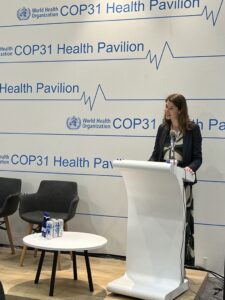
The event brought together perspectives from governments, funders, researchers, communities and humanitarian organisations. Claire Chivell, Director of COP31 Pacific Engagement at Australia’s Department of Foreign Affairs and Trade, opened the session, with contributions spanning national climate and health planning, financing, community priorities, research and innovation, and the realities of delivering healthcare in settings affected by climate shocks
A changing climate and a changing context for vector control
Vector control has been one of the most effective ways to prevent malaria and other vector-borne diseases. In a warming world, its importance will not diminish. But the conditions in which vector control needs to work are becoming more complex.
Climate change can influence the geographic range and seasonality of vector-borne diseases and the intensity of transmission in places already affected. At the same time, extreme weather can damage housing and infrastructure, disrupt health services and contribute to population displacement. These changes can affect not only disease risk, but how, where and when existing vector control interventions can be used.
Insecticide-treated nets will remain central to malaria prevention, for example, but changing environments and patterns of human behaviour may influence when and how people are exposed to mosquito bites. In humanitarian and emergency settings, people may also be living in temporary accommodation where conventional interventions are more difficult to deploy.
This means the response cannot simply be to deploy today’s tools more widely. Vector control itself must continue to evolve.
For IVCC, that means continuing to develop and improve effective vector control solutions, from new insecticides and modes of action that can help manage insecticide resistance, to improved insecticide-treated nets and interventions to protect people in increasingly varied operational and humanitarian settings.
Climate-resilient health systems will need climate-ready vector control
Developing a new vector control product takes time. Waiting until transmission patterns have changed, resistance has spread or an existing intervention is no longer sufficiently effective would leave countries responding to new challenges without all the tools they need.
Preparedness therefore means investing now in the science, product development, evidence generation and delivery systems that will be needed in the future.
That does not necessarily mean developing an entirely new set of interventions specifically for climate change. IVCC’s work examining its implications has reinforced the continuing relevance of the existing vector control portfolio, alongside the need to anticipate where existing tools may need to evolve or new approaches may be required.
Making infectious disease part of the climate conversation
The case for climate-ready vector control sits within a wider shift in how health is being considered in the global climate response. The Belém Health Action Plan, launched at COP30, set out a framework for adapting health systems to climate change, with priorities spanning surveillance and monitoring, evidence-based policy and capacity building, and innovation and sustainable production.
COP31 provided an important opportunity to take that message beyond the vector control and malaria communities. Alongside the discussions in Antalya, IVCC and partners CEPI, DNDi, Gavi, Medicines for Malaria Venture and Unitaid have contributed to a new policy brief on extreme heat and climate-sensitive infectious diseases. The brief calls for climate-sensitive infectious diseases to be recognised more clearly within climate adaptation, including through stronger surveillance and prevention, investment in health innovation and more climate-resilient health systems.
For IVCC, participating in COP31 was an opportunity to bring vector control into a wider climate and health conversation, and to make a simple case: ensuring countries have the right tools, at the right time, to prevent disease transmission needs to be part of how we prepare for the health challenges of a changing climate.
Read the joint policy brief: Extreme heat and climate-sensitive infectious diseases.