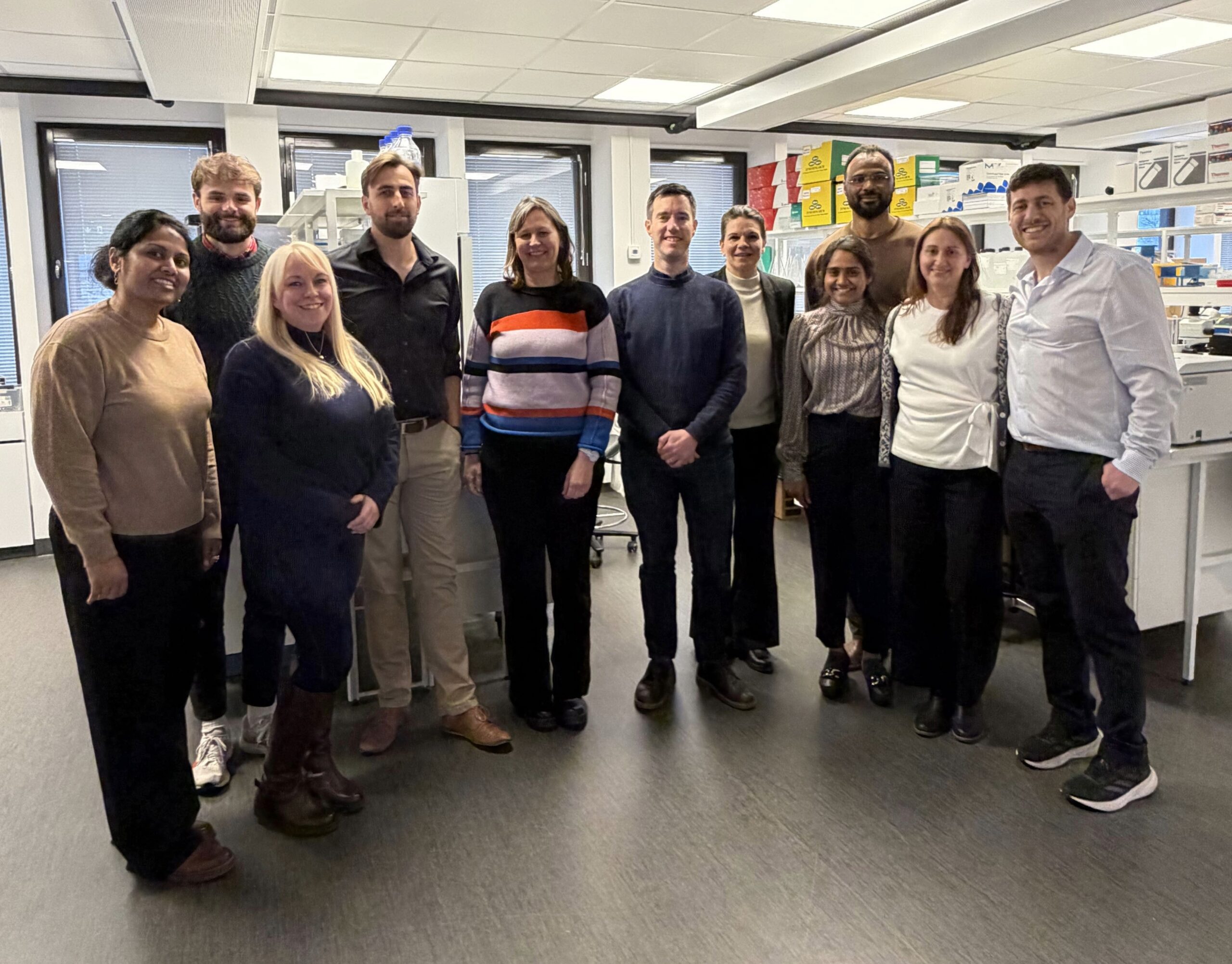

IVCC hosted Olu Odufuwa from Ifakara Health Institute in Tanzania at our Liverpool office last week. The visit focused on technical knowledge sharing, laboratory capacity development, and strengthening collaboration across global vector control research sites.
During the visit, Olu met the IVCC technical team and delivered a joint presentation to colleagues from IVCC and the Liverpool School of Tropical Medicine. The session focused on using the Before and After Method to measure surface concentrations of insecticides on coated and incorporated insecticide-treated nets before and after washing and use. This method supports a more accurate understanding of how insecticides perform on net materials over time.
Olu also shared an update on the expansion of the chemistry laboratory capacity at Ifakara Health Institute. The facility now supports a full suite of insecticide-treated net testing, including laboratory studies, semi-field testing, experimental hut trials, chemical characterisation, and physical assessment. The laboratory can also support chemical preparation, High-Performance Liquid Chromatography (HPLC) analysis, textile testing, and spatial emanator testing. IVCC has supported equipment that contributes to this expanded capability.
The visit included a tour of the Liverpool Insect Testing Establishment (LITE) facility and technical discussions on testing approaches.
Olu Odufuwa said: “This visit really reinforced how critical it is to collaborate with partners to strengthen our testing approaches and lab capacity. When we share practical techniques like the “Before and After Method”, we all get better at evaluating insecticide efficacy on treated nets. There’s something about meeting face-to-face that helps align our standards, spark new ideas, and build stronger connections across the global vector control community.”
Face-to-face engagement enabled detailed technical discussions and strengthened relationships between teams. The visit reinforced the importance of knowledge sharing between Good Laboratory Practice sites and identified specific opportunities for future capacity expansion, including potential equipment sharing protocols and joint training initiatives across facilities.