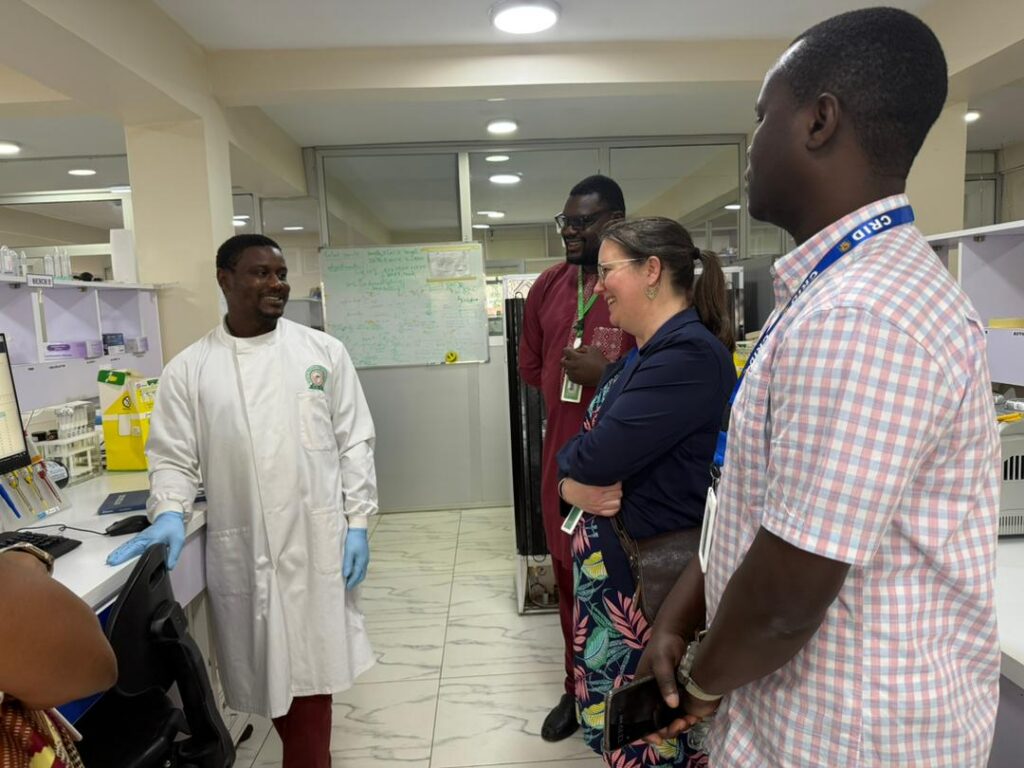

IVCC staff visited the Centre for Research in Infectious Diseases (CRID) in Yaoundé, Cameroon, earlier this month and were warmly welcomed by Prof Charles Wondji and his team. The visit aimed to strengthen IVCC’s partnership with CRID and to deepen our understanding of laboratory and field-trial capacity across Central Africa.
Dr Janneke Snetselaar, Senior Technical Manager, and Dr Renaud Govoetchan, Field Entomologist, met with CRID leadership and research teams. Discussions focused on research priorities, operational capabilities, and opportunities for future collaboration.
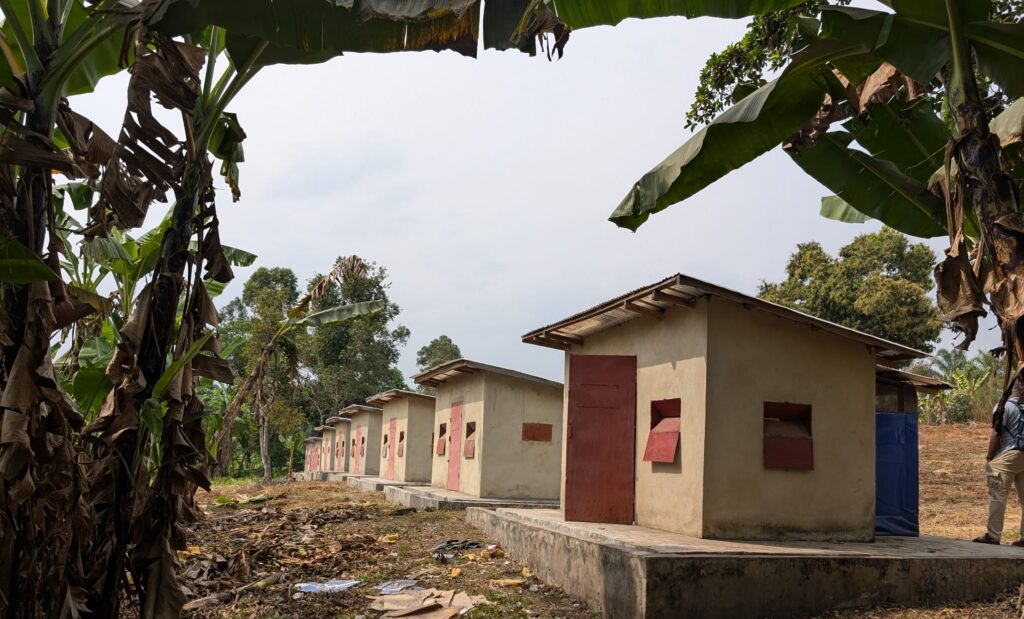
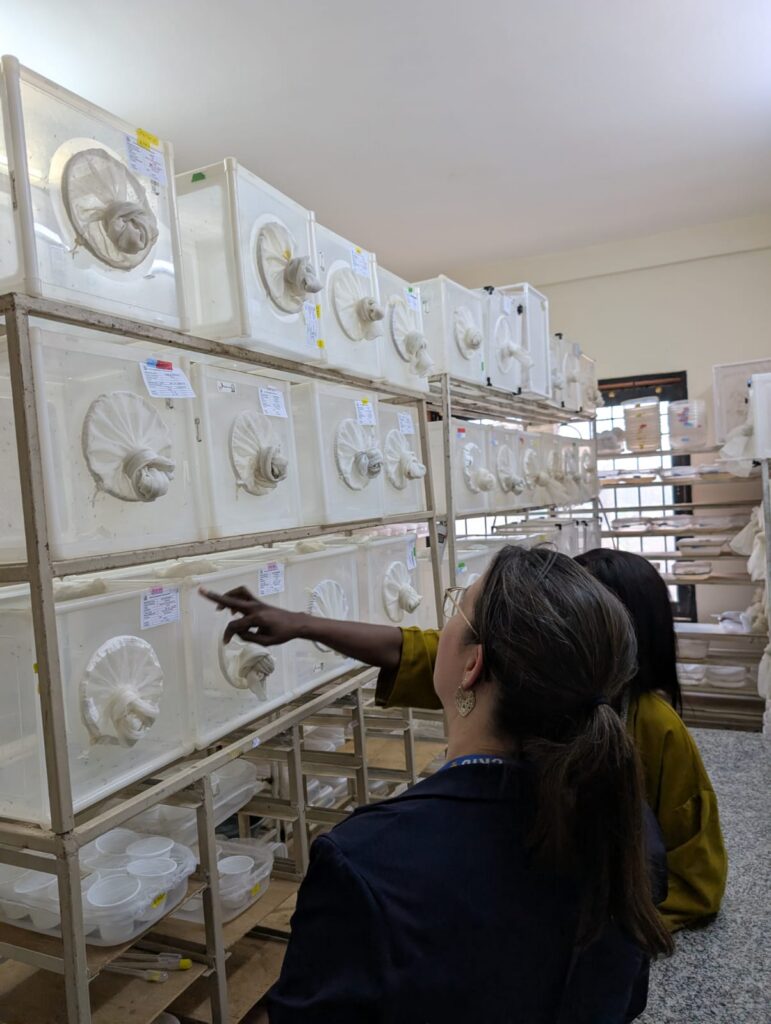
The delegation toured CRID’s insectaries, bioassay facilities, and molecular biology laboratories. The team also visited the Elende experimental hut station near Yaoundé. This site plays an important role in monitoring insecticide resistance. CRID recently reported reduced susceptibility to chlorfenapyr in local Anopheles funestus populations at this location. This finding is highly relevant to IVCC’s insecticide treated net (ITN) development portfolio.
The IVCC team then travelled to Mangoum in western Cameroon to visit a second experimental hut station. The site is located in an intensive agricultural area where multiple pesticide classes are widely used. Local mosquito populations show high levels of resistance to many public health insecticides. The visit provided valuable insight into resistance management challenges in high pressure environments.
Dr Janneke Snetselaar said: “Spending time with the CRID team gave us valuable insight into the resistance challenges they are seeing in real world settings. Strong partnerships like this help ensure new vector control tools remain effective where they are needed most.”
The visit also included engagement with Cameroon’s National Malaria Control Programme. Discussions focused on current vector control strategies, operational challenges, and future technical support needs.
At the request of CRID, IVCC staff met with the team preparing for Good Laboratory Practice accreditation. Discussions covered preparatory steps and key requirements needed to support the accreditation process. This builds on IVCC’s long-standing programme to strengthen Good Laboratory Practice (GLP) capacity, helping research facilities develop and implement quality management systems compliant with international GLP standards to generate reliable data for vector control product evaluation.
The visit highlighted the importance of strong regional partnerships to support vector control research, resistance monitoring, and the development of new tools to prevent malaria.