To mark World Mosquito Day, IVCC’s Director of Portfolio and Market Access, Mathias Mondy, reflects on the need to develop the next generation of vector control tools to stay ahead of insecticide resistance.
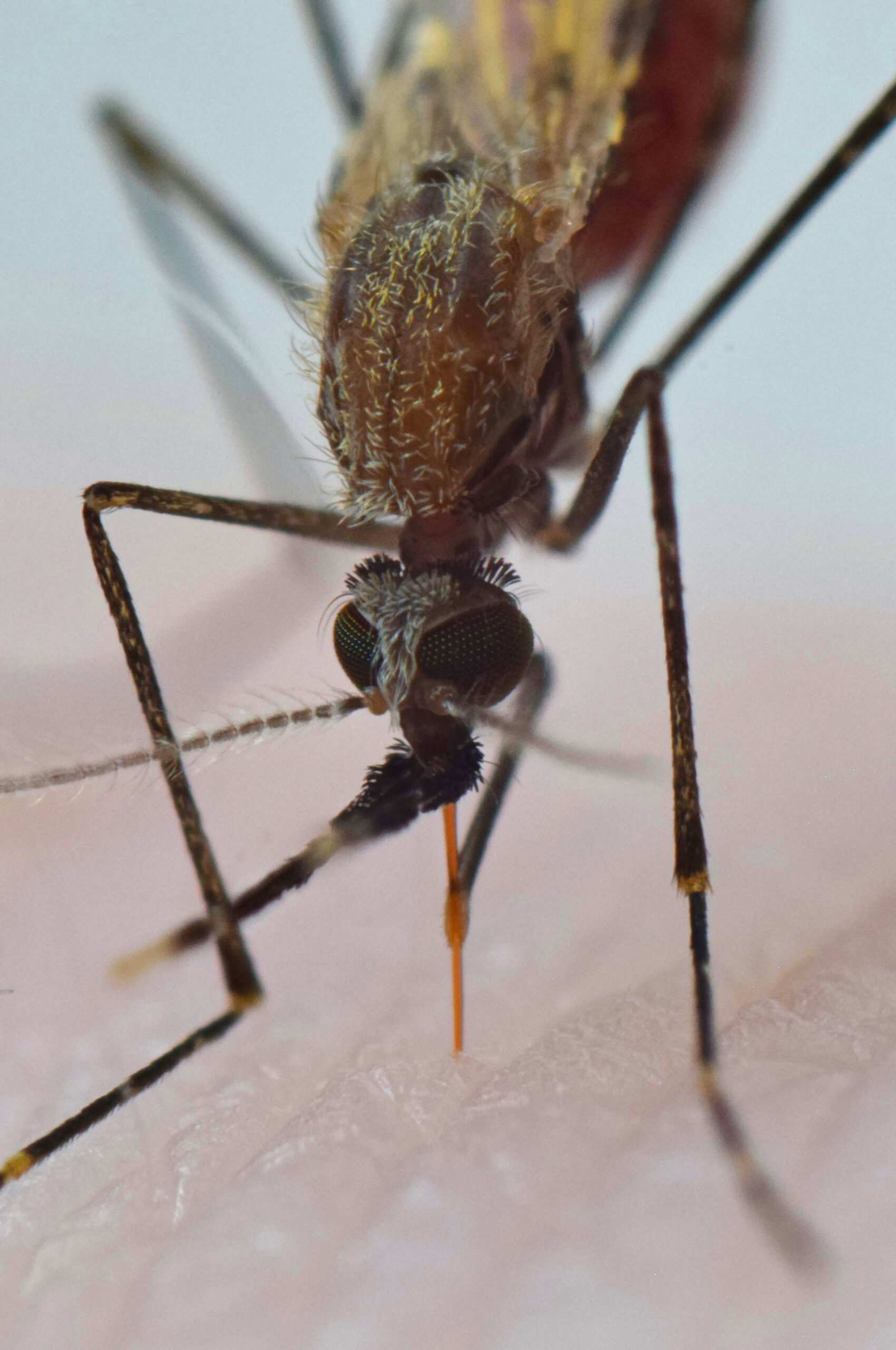
World Mosquito Day provides an opportunity to reflect on the continuing importance of mosquitoes as a global public health challenge. For those working to control mosquito-borne diseases, it is also an opportunity to consider what will be needed to sustain progress.
For malaria in particular, vector control remains one of the most effective ways to reduce transmission. Yet the effectiveness of many of the tools we rely on is being challenged by growing insecticide resistance. This is not only a challenge for today’s vector control programmes; it is a challenge for the products we develop for the future.
Mosquito populations are evolving in response to the insecticides they encounter, both through public health interventions and, in some settings, agricultural use. As resistance develops, the efficacy of insecticides used in vector control products can be compromised. Staying ahead of this threat means developing new chemistries, modes of action and tools to ensure that effective options remain available as resistance evolves.
This has important implications for how we think about product development.
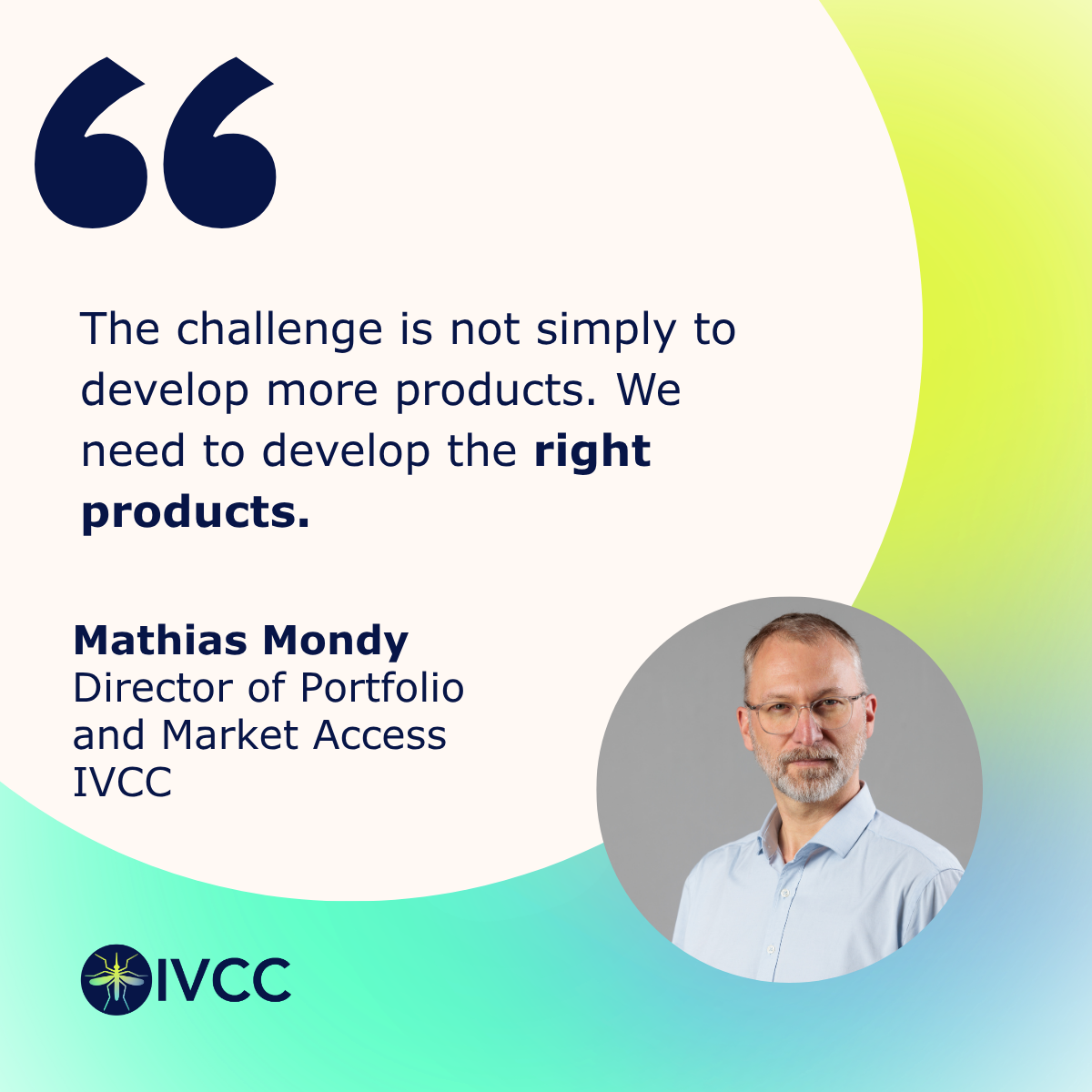
The challenge is not simply to develop more products. We need to develop the right products: tools that can address resistance, complement existing interventions and respond to changing mosquito populations and transmission patterns, including those influenced by a changing climate.
At IVCC, staying ahead of resistance is a key consideration in how we approach our portfolio. Developing a new active ingredient is not simply about finding chemistry that kills mosquitoes. A successful candidate needs to demonstrate efficacy against relevant mosquito populations, including those with existing resistance; have an appropriate safety profile; be capable of being developed into a practical product; and offer the potential for sustained effectiveness as resistance continues to evolve.
Developing a new vector control product is a complex, lengthy and financially demanding process. Candidates can face significant scientific, regulatory and commercial hurdles, and there is no guarantee that an investment in early-stage research will ultimately result in a product that reaches the market.
This makes partnerships particularly important. By bringing together expertise from industry, academia, public health and philanthropy, Product Development Partnerships such as IVCC can help to share risk, accelerate development and move promising innovations through the pipeline.
This is why maintaining a strong and diverse product pipeline matters. At IVCC, we are working to advance new active ingredients and technologies across different vector control approaches, including next-generation insecticide-treated nets, spatial emanators and tools designed to target mosquitoes outdoors. Different tools and modes of action can play complementary roles in reducing transmission and managing the risk posed by insecticide resistance.
Across our portfolio, resistance management and the evolving needs of endemic countries are considered throughout product development. The objective is to ensure that the pipeline delivers new tools that contribute to a broader and more sustainable approach to vector control.
Bringing a product through development is only part of the challenge. For an innovation to deliver public health impact, it must also be suitable for the settings in which it will be used, meet regulatory and public health requirements, be commercially viable and be accessible to communities that need it. This requires engagement with endemic-country stakeholders and implementation partners alongside product development, from optimising existing approaches such as indoor residual spraying (IRS), to generating the evidence needed to support the deployment of newer tools such as spatial emanators.
These issues will be central to my contribution to Global Institute for Disease Elimination’s (GLIDE) World Mosquito Day webinar, The Future of Mosquito-Borne Disease Control: Innovation, AI, Preparedness and Response.
For vector control, this means continuing to invest in a diverse pipeline of next-generation tools and ensuring that resistance is considered throughout their development. It also means strengthening the partnerships needed to take successful innovations from discovery through to products that can be adopted and deployed in endemic countries.
The progress made against mosquito-borne disease has shown what effective vector control can achieve. The challenge is to ensure that the next generation of tools meets the changing threats to mosquito control and maintains that progress.